Accounting Equation
Foundational bookkeeping relationship showing that assets are financed by liabilities and equity.
Definition
The accounting equation is the core bookkeeping relationship that states:
\[ \text{Assets} = \text{Liabilities} + \text{Equity} \]
It explains why the balance sheet stays in balance and why every valid double-entry transaction must affect at least two accounts in a way that preserves that relationship.
Why It Matters
The accounting equation is the logic underneath the entire recording system. It helps readers understand where a transaction lands, why debits and credits must offset, and how profit, borrowing, owner investment, and distributions eventually affect the balance sheet.
How It Works In Accounting Practice
Every transaction changes at least one side of the equation and usually more than one account. Borrowing cash increases both assets and liabilities. Earning revenue usually increases assets or receivables and also increases equity through profit. Paying dividends reduces assets and reduces equity.
The equation is not just a classroom formula. It is the structural reason the general ledger, trial balance, and balance sheet can be reconciled.
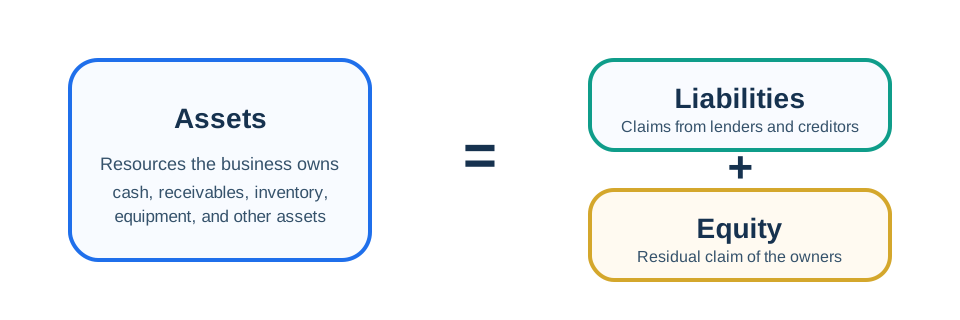
The balance sheet grouping below shows the same relationship visually:
Simple Example
The equation stays balanced as transactions are recorded:
| Transaction | Assets | Liabilities | Equity |
|---|---|---|---|
| Opening owner investment | 20,000 | 0 | 20,000 |
| Bank loan received | 32,000 | 12,000 | 20,000 |
| Service revenue earned on account | 37,000 | 12,000 | 25,000 |
After all three steps, assets still equal liabilities plus equity.
Common Confusions
The accounting equation does not mean each individual asset must match a specific liability or equity item. It means the total recorded resources of the business must equal the total claims against those resources. It also is not limited to the balance-sheet date. The equation underlies every posted transaction throughout the period.