Break-Even Analysis
Managerial-accounting analysis used to estimate the sales volume needed to cover fixed and variable costs.
Definition
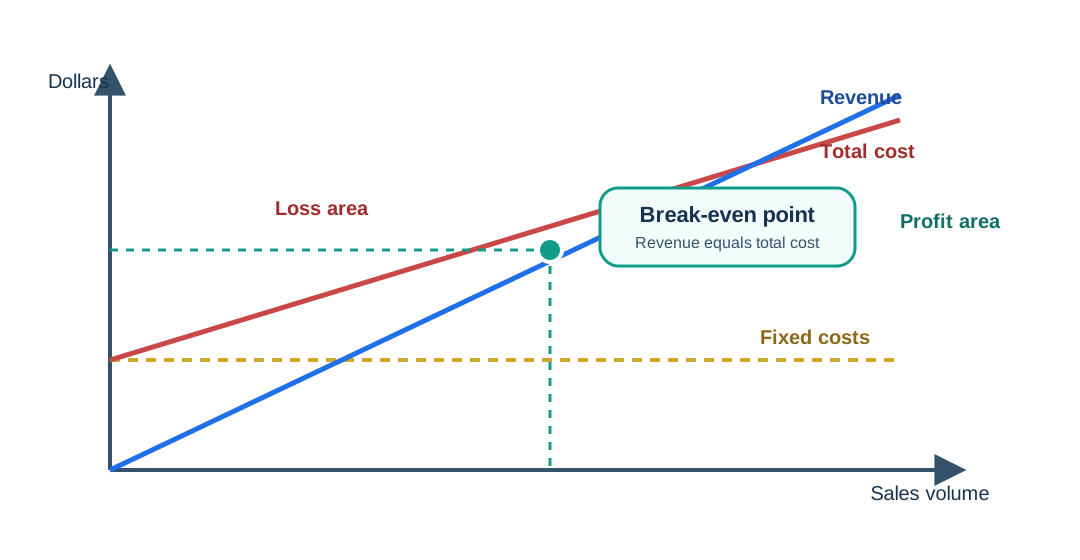
Break-even analysis estimates the level of sales at which total revenue equals total cost, so profit is zero. It helps managers understand how much volume is required before the business starts generating operating profit.
Why It Matters
The method is useful for pricing discussions, cost-structure review, budgeting, and product decisions. It shows how sensitive profitability is to changes in price, variable cost, or fixed cost.
How It Works In Accounting Practice
Break-even analysis usually relies on contribution margin. In unit terms, a common form is:
\[ \text{Break-Even Units} = \frac{\text{Fixed Costs}}{\text{Unit Contribution Margin}} \]
In sales dollars, a common form is:
\[ \text{Break-Even Sales Dollars} = \frac{\text{Fixed Costs}}{\text{Contribution Margin Ratio}} \]
The calculation is simple, but the assumptions behind it matter. Managers usually assume a stable selling price, stable variable cost behavior, and a relevant operating range.
The break-even point is the point where the revenue line and total-cost line intersect:
Simple Example
Assume fixed costs of 120,000, selling price per unit of 80, and variable cost per unit of 50:
| Input | Amount |
|---|---|
| Selling price per unit | 80 |
| Variable cost per unit | (50) |
| Unit contribution margin | 30 |
| Fixed costs | 120,000 |
| Break-even units | 4,000 |
| Break-even sales dollars | 320,000 |
At 4,000 units, contribution margin exactly covers fixed costs, so operating profit is zero.
Common Confusions
Break-even analysis does not replace full financial reporting. It is an internal planning tool, not a complete external-reporting model. It also depends heavily on good contribution-margin assumptions.